 Flock
Flux
A box for a venue’s counter or doorway that counts the people in the room and sends Flock the numbers.
It’s a prototype. The case on this page is a 3D design and hasn’t been printed yet.
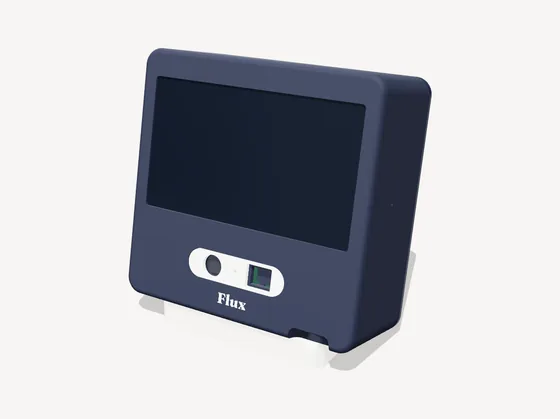
What’s inside it
- Thermal camera
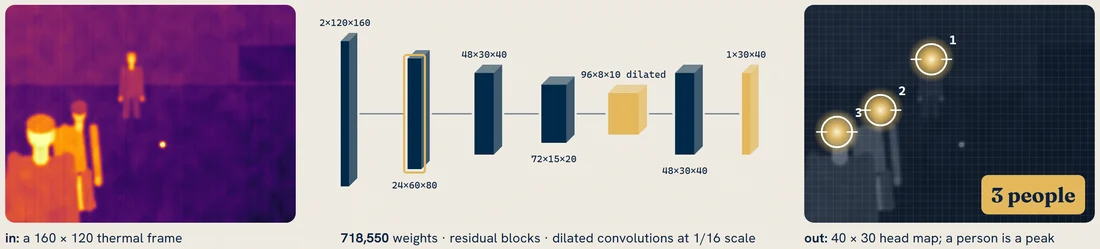
- A FLIR Lepton 3.5. It sees heat, 160 by 120 points of it. Owl, further down, is the model that counts the people in those frames.
- Table camera
- A small color camera, connected by USB, in the pill beside the heat camera. It’s for tables, not people: a cover sits over its lens except during a check, and it’s off unless the venue turns it on. It hasn’t been fitted to a unit yet.
- Door counter
- A VL53L8CX, which measures distance in an 8 by 8 grid. It looks down at a doorway from under the case to count people walking in and out. It’s wired up and reading, but it hasn’t been tested on people walking through a real doorway yet.
- Sound meter
- A small decibel meter, already bought and built into the case design, measures how loud the room is. Until it’s plugged in, the working unit uses a microphone that gives a rough louder-or-quieter level.
- Screen
- A 7 inch touchscreen on the front shows the live readings.
- Raspberry Pi 5
- The computer inside, with an Active Cooler on top.
Owl does the counting
Owl is a small neural network we trained to count people from heat. It runs on the Raspberry Pi inside Flux, so each frame is counted on the box that took it.
It reads one thermal frame at a time and marks each person as a peak of warmth. Only the count moves on. The frame never leaves the box.
We trained it on generated thermal frames and 28 public thermal datasets, never on anything a Flux unit recorded, then tested it on footage it had never seen. It hasn’t run in a venue yet. The results are on the research page.

What leaves the box
Every 30 seconds Flux is built to send a few numbers over Wi-Fi or Ethernet: the people it counts, door crossings, an estimate of how full the room is, and the noise level. A unit set up for tables also sends, for each table, how many people are at it and whether it is free, seated, needs a server or needs clearing. With the table camera on, it also says whether each table is clear and, from a check of the empty room, how many tables it found and how many chairs each has. No images, video or identities leave it.

Tables
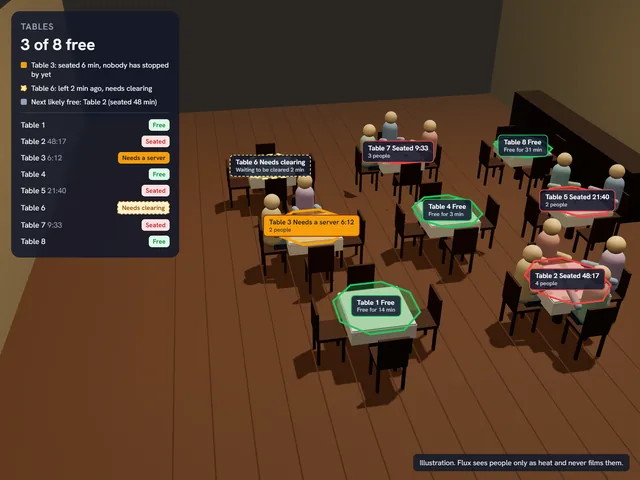
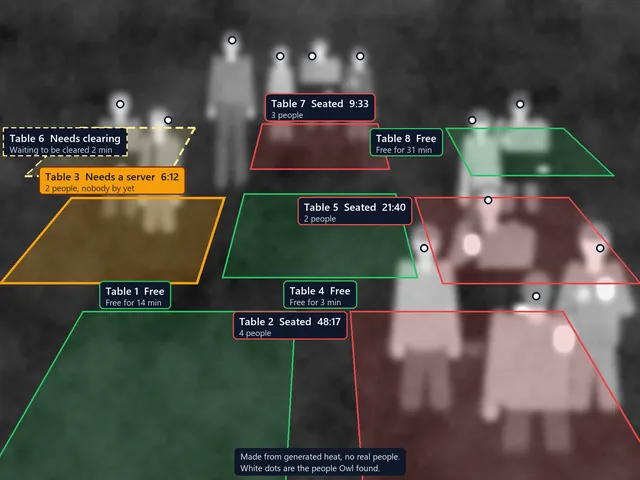
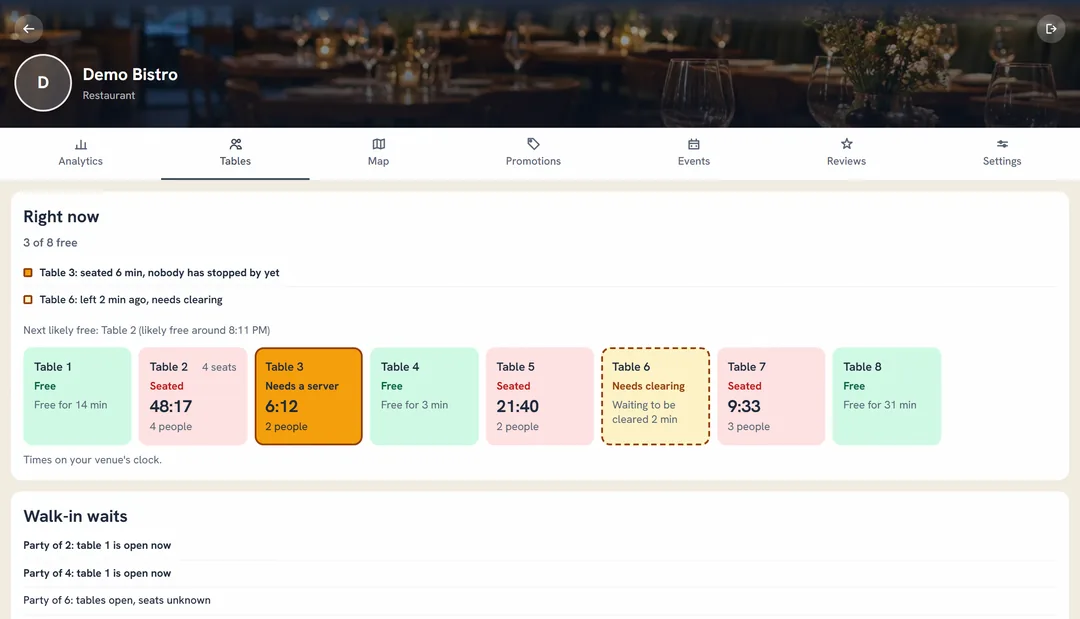
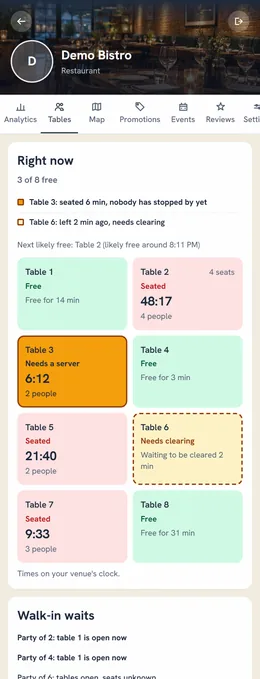
One box on the ceiling above the door looks down on most of a dining room. Each table in view is free, seated, needs a server or needs clearing. A seated table carries a timer from when the party sat down, and it needs a server when nobody has come by in 5 minutes.
The venue sees every table on a Tables tab, with an alert when one needs a server or clearing. It’s all worked out from heat on the box. What leaves is each table’s number, head count, state and how long it has been that way.
Flux can learn where the tables are from where people sit, so nobody has to draw them in.
Once the table camera is fitted, a venue will be able to turn it on, so Flux can tell whether a table still has dishes on it. It looks at a table only when the heat camera shows nobody at or near it, cuts the picture down to the table, blacks out anything warm and deletes it on the box. If a person is still there, the picture is thrown away unchecked. At most once a day, after the room has been empty for ten minutes, it can look at the whole room to find the tables and count chairs. Every look is logged, and the venue sees the log on its Tables tab.
In parts
Front to back, in the order it goes together.

Put it together
Slide the bar and the parts come together into the finished box.
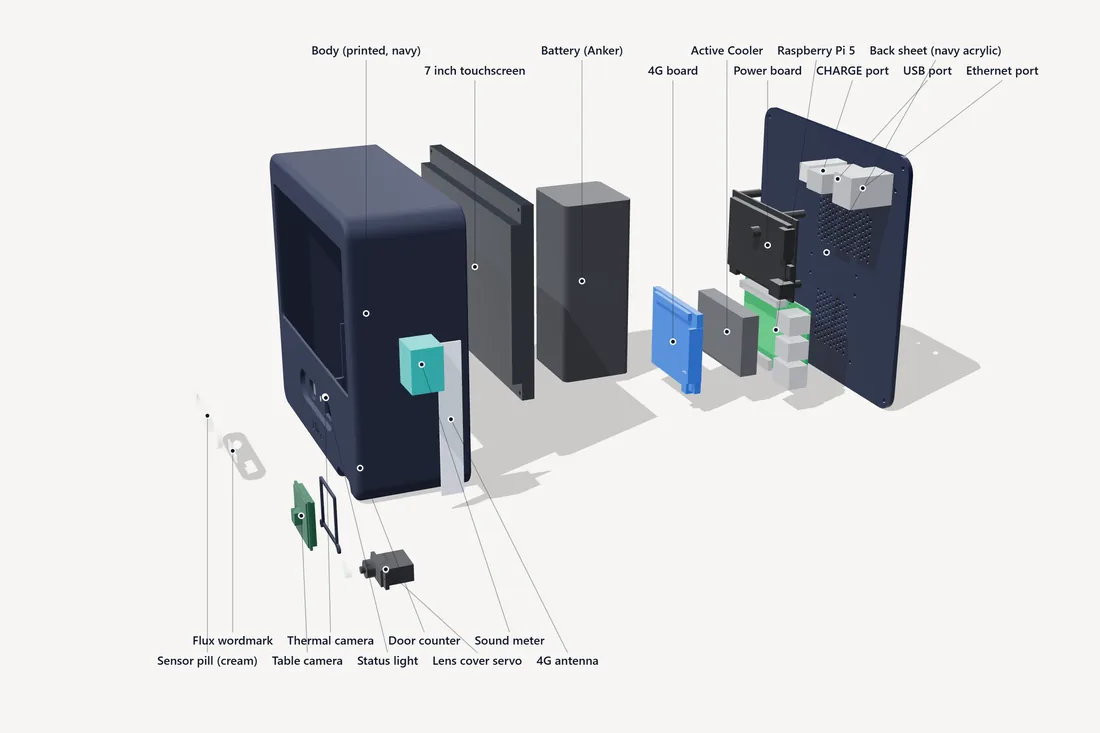
Pulled apart
Every part of the case, laid out front to back.
Drag the bar to build it.
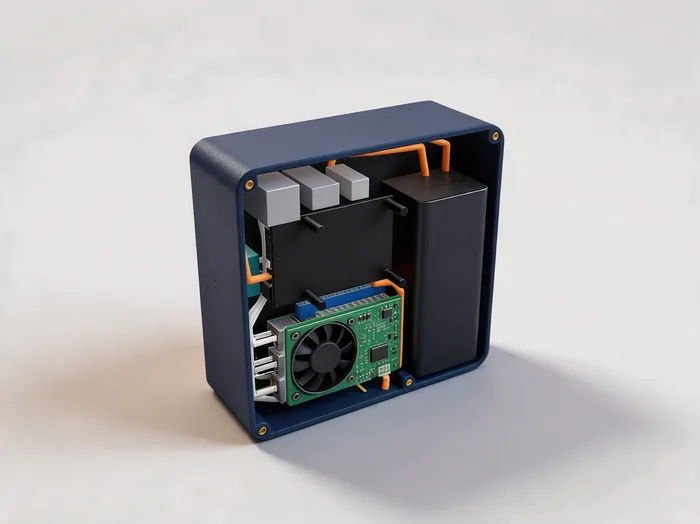
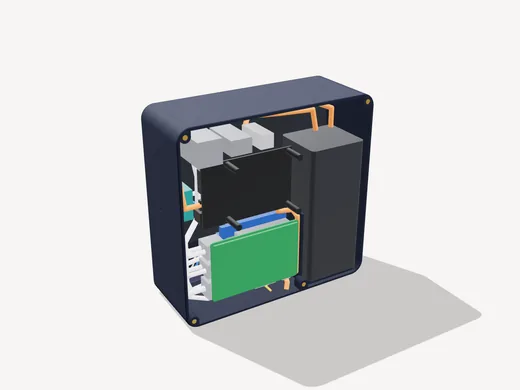
With the back off
The battery stands on its end behind the screen, and the Raspberry Pi and its cooler are cabled to the ports.
Where it goes
On a counter
It leans back 12 degrees on its cream stand, screen to the room.
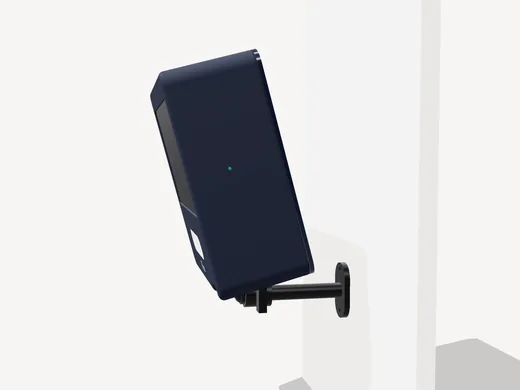
Over a door
A camera arm tilts it 15 degrees down, and the door counter looks 65 degrees down at the floor of the doorway.
Over a dining room
For tables it goes on the ceiling above the door, tipped about 30 degrees down, so the heat camera and the table camera look across the room from the same place.
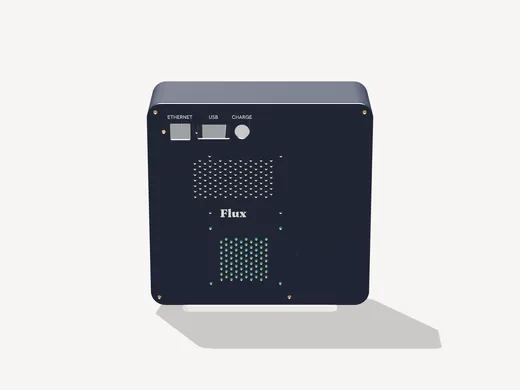
Power and ports
A battery inside runs it through a USB-C power board and charges through the CHARGE port. Ethernet and USB are on the back too.
The models behind it
Owl is one of four models in Flock. One page covers all of them.